Cryptocurrency was built to remove intermediaries — no bank, no central authority, just a private key that proves ownership. That same design, however, creates a unique vulnerability: unlike a traditional account, there’s no “forgot password” option. Whoever controls the key controls the asset, permanently. This makes the physical security of that key arguably more important than any other aspect of digital asset ownership.
The false comfort of “hot” storage
Wallets connected to the internet — exchange accounts, mobile apps, browser extensions — are convenient, but convenience and security tend to move in opposite directions. Every connection to a network is a potential attack surface: phishing, malware, exchange breaches, SIM-swap attacks. Billions of dollars in digital assets have been lost this way, not because the underlying cryptography failed, but because the human and network layer around it did.
What air-gapped storage actually solves
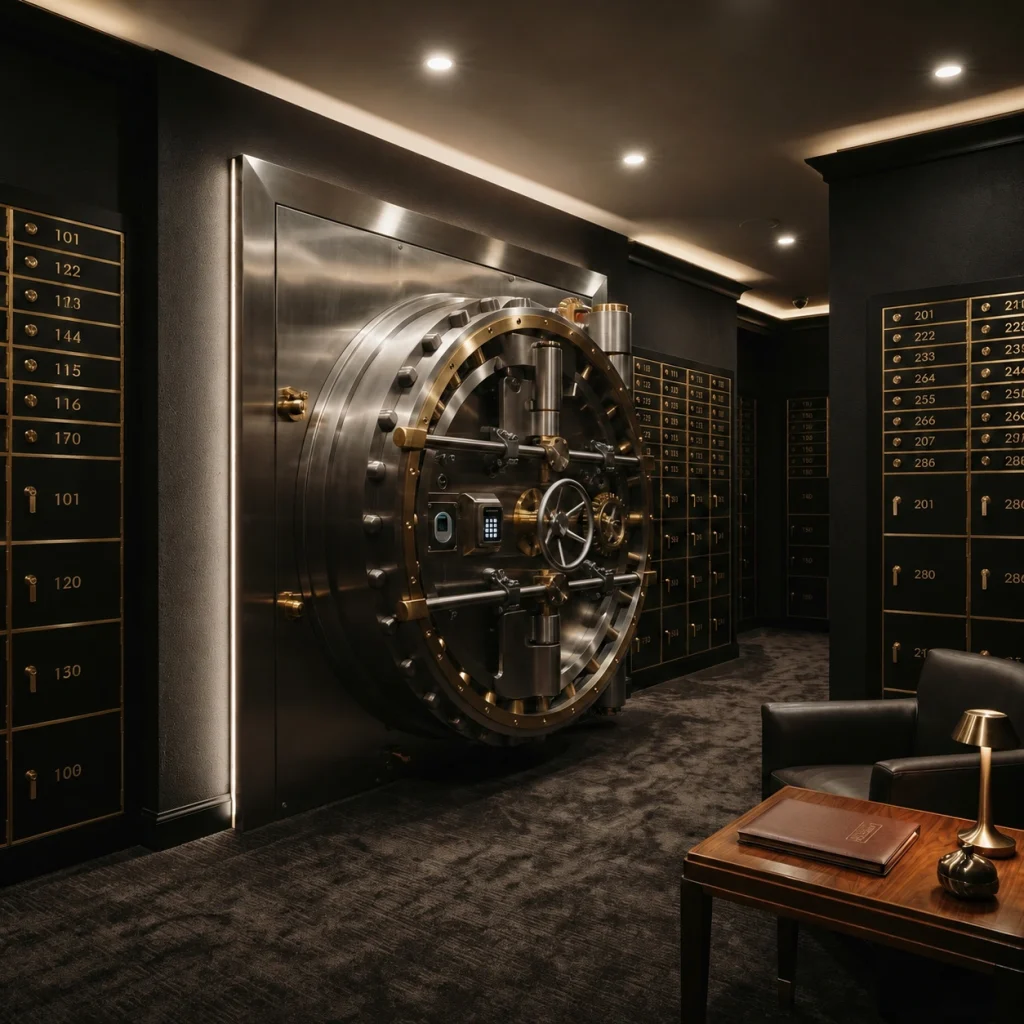
Cold storage — keeping private keys or seed phrases on a device or medium that has never touched the internet — removes the remote attack vector entirely. There’s no server to breach, no session to hijack, because there’s no connection to intercept. Combined with a physically secure, access-controlled location, this reduces the attack surface to something that requires actual physical access, verified and logged, rather than a lucky phishing email.
Multi-signature protocols add a second layer on top of this: rather than a single key controlling an asset, multiple independent approvals are required before any transaction can be authorized. This means no single point of failure — not a compromised device, not a coerced individual, not a lost key — can move assets on its own.
The estate-planning problem no one talks about
A less-discussed risk in digital assets is what happens when the sole holder of a private key becomes incapacitated or passes away, without a plan for transferring access. Unlike a bank account, there’s no institution to call, no legal process that magically restores access. Structured succession protocols — where authorized successors have a clear, pre-defined, verified path to asset recovery — are not a luxury for digital holdings. They’re closer to a necessity.
The takeaway
Digital assets are often discussed purely in terms of blockchain security — cryptography, consensus mechanisms, smart contract audits. But the weakest link is rarely the blockchain itself. It’s the human and physical layer surrounding the private key. Pairing digital sovereignty with serious physical custody — air-gapped storage, multi-signature authorization, and a real succession plan — is what actually closes the loop between “technically secure” and “practically safe.”